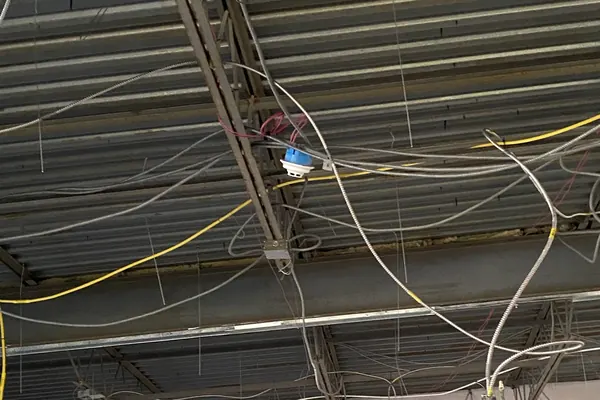
- Price is driven by device count, how hard the building is to run cable in, whether the panel is conventional or addressable, and whether engineering and permits are in the quote.
- A retrofit in an occupied building with finished ceilings costs substantially more than the same system in open construction, often 20 to 40 percent more.
- The quote comes from a walkthrough, not a square footage formula. Call 732-346-5333 for a real number on your building.
Why Two Quotes on One Building Differ by Double
Fire alarm pricing confuses people because it does not behave like most construction line items. Square footage is a weak predictor. A 10,000 square foot open warehouse can cost less than a 4,000 square foot medical suite with twenty small rooms, because the suite needs far more devices and far more labor per foot.
Four variables explain most of the spread between quotes:
- Device count. Every detector, pull station, horn strobe, and module is hardware plus the labor to mount, wire, address, and test it. This is the real unit of pricing.
- Access. Open ceilings during construction versus fishing cable through a finished, occupied building. Same devices, very different labor.
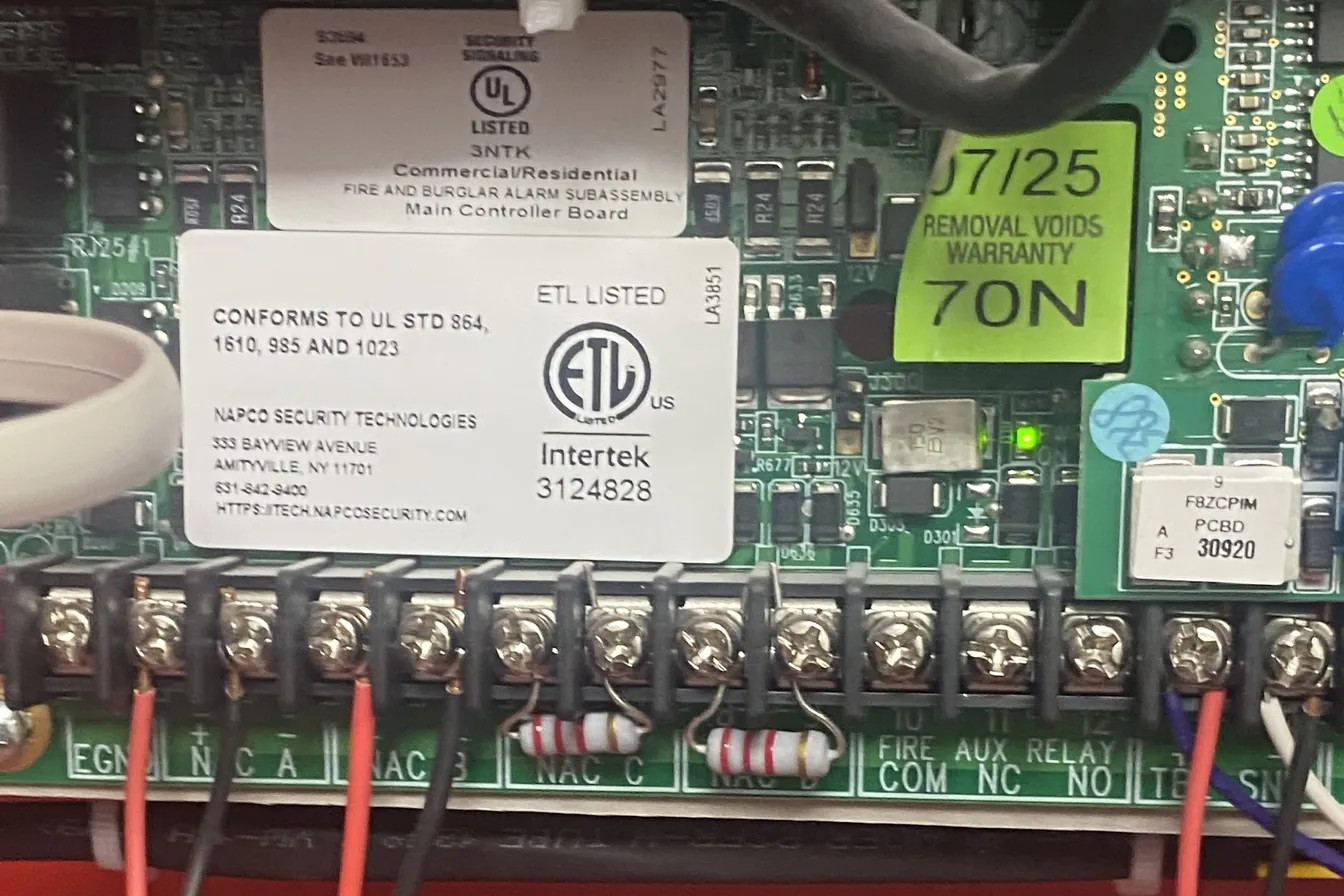
- Panel type and capacity. Conventional versus addressable, and whether the existing panel has room or has to be replaced.
- Scope. Whether engineered drawings, permit filing, inspection coordination, and final testing are in the number or quietly left out.
That last one is where apples stop being apples. A quote missing drawings and permit work is not cheaper, it is incomplete, and the difference lands on you later.
The Honest Range
Published figures for commercial fire alarm work vary wildly, partly because a small retail buildout and a hospital wing both get called commercial. Treat anything you read, including this, as a planning range rather than a quote.
Broad planning ranges for a fully installed, permitted, inspected system:
- Small commercial space, roughly 2,000 to 5,000 square feet. A modest device count on a small addressable or conventional panel. Think a single tenant office, a shop, a restaurant.
- Mid-size building, roughly 10,000 to 30,000 square feet. Multiple zones, more notification, usually addressable, often with duct detection and sprinkler supervisory tied in.
- Large or complex buildings, 50,000 square feet and up. Voice evacuation, elevator recall, multiple panels or network nodes, phased work around an operating business.
Per square foot numbers get quoted anywhere from well under a dollar to north of ten, and that enormous range is the honest answer, not a dodge. The low end describes a simple open building in new construction. The high end describes a complex occupancy retrofitted while occupied. New Jersey sits toward the upper half of national figures because of labor costs and because the permit and inspection process here is real work.
The number that actually matters is the one that comes from walking your building and counting devices against the code requirement for your occupancy. Anyone who quotes a commercial fire alarm over the phone without seeing the space is guessing, and the guess gets corrected later in a change order.
Conventional Versus Addressable
This decision moves the price more than almost anything else.
A conventional system groups devices into zones. The panel reports that something in zone 3 activated, and someone walks zone 3 to find out what. Hardware is cheaper and it is a reasonable fit for small, simple buildings.
An addressable system gives every device its own identity. The panel reports the specific detector in the specific room. It costs more up front and it changes the economics of everything afterward. Troubleshooting is faster, nuisance alarms are easier to trace to a single bad device, and the annual inspection is quicker because the panel tells the technician what it sees.
Larger buildings generally require addressable in practice, because finding a device in a zone across 40,000 square feet during an actual event is not acceptable. For small buildings it is a real choice. The useful way to frame it is that addressable costs more to install and less to live with, and the crossover point arrives sooner than most owners expect, especially in a building with any history of false alarms.
The Retrofit Premium Is Real
The same system costs meaningfully more in an existing occupied building than in open construction, commonly on the order of 20 to 40 percent and sometimes well beyond it.
Where that goes:
- Cable paths. Fishing wire above hard ceilings, through masonry, or around existing mechanicals is slow work, and slow work is the cost.
- Working around occupancy. Nights and weekends so a business can operate, which carries a labor premium.
- Patching. Drywall, ceiling tile, and paint after the cable is in.
- Keeping protection live. Phasing the cutover so the building is never unprotected, sometimes with a temporary fire watch.
- Surprises. Undocumented existing wiring, asbestos-era materials, and conditions nobody could see until the ceiling opened.
The practical takeaway is timing. If a renovation is coming, that is the cheapest moment to do fire alarm work, and the same visit is the cheapest moment to run access control and camera cable while ceilings are open.
Permits, Drawings, and Inspection
In New Jersey a commercial fire alarm installation is permitted work under the Uniform Construction Code, reviewed by the local fire protection subcode official. That means engineered drawings, a permit, and a witnessed final test before the space is signed off.
This is a real line item and it is where lowball quotes hide. If a number looks notably better than the others, the first question is whether it includes drawings, permit filing, inspection coordination, and the final test with the official present. A quote that stops at hardware and labor is not comparable to one that gets you to an approved system.
The honest version of this: ask every bidder to break out engineering and permits separately. The quotes become comparable immediately, and the one that cannot produce that breakdown has told you something.
What It Costs After Installation
Installation is the big number. These are the ones that recur.
- Central station monitoring. A modest monthly cost, varying with the communication path and service level. Cellular and dual path cost a little more than IP alone and remove a dependency, which we got into in the copper shutdown post.
- Annual inspection and testing. Scales with device count and complexity. A small building is a few hundred dollars a year. A large one with elevator recall, duct detection, and sprinkler supervisory is considerably more, because it is considerably more work. See how often inspection is required.
- Batteries. Every three to five years, and not optional. They are the most common inspection failure.
- Repairs and device replacement. Detectors age, strobes get damaged, buildings change.
One cost people forget to count on the other side of the ledger: a copper phone line maintained purely for the alarm can run forty to sixty dollars a month, and moving to a cellular communicator often removes it entirely.
How to Compare Quotes Without Getting Burned
Ask every bidder for the same five things and the comparison does itself:
- A device count by type. Detectors, pull stations, notification appliances, modules.
- Panel make, model, and spare capacity. How much room is left for the building to change.
- Engineering, permit filing, and inspection coordination, broken out as line items.
- What happens to the existing system, if there is one, and what is being reused versus replaced.
- Monitoring cost, contract length, and who owns the equipment at the end of it.
That last point matters more than its size suggests. Some companies install at a discount and recover it through a long monitoring contract on equipment you never own, which is a different deal from the one it appears to be. We went through the tradeoffs in local versus national alarm companies.
We design, install, permit, and monitor commercial fire alarm systems across Edison, Woodbridge, Metuchen, New Brunswick, Piscataway, and Middlesex, Monmouth, Union, Somerset, Essex, and Morris counties. Tell us about the building and we will walk it and give you a real number. Call 732-346-5333 or use the form below.