- Fire alarm code compliance for NJ commercial buildings | NFPA 72, Uniform Fire Code, inspection schedules, and what actually fails audits.
- Questions about your property? Certified Protection answers them free: 732-346-5333.
- What Actually Governs NJ Commercial Fire Alarms
- When Commercial Fire Alarms Are Required
- The Core Fire Alarm System Components
- Required Inspections and Testing
- What Most Often Fails Fire Inspections
- When Building Changes Trigger System Updates
- The Costs of Non Compliance
- Getting Compliant (or Staying That Way)
- How Certified Protection Handles NJ Commercial Fire
- Questions People Ask
What Actually Governs NJ Commercial Fire Alarms
Fire alarm requirements for commercial properties in New Jersey come from three overlapping sources:
- New Jersey Uniform Fire Code (N.J.A.C. 5:70), the state level regulatory framework
- NFPA 72 (National Fire Alarm and Signaling Code), adopted by reference, the technical standard
- Local municipal amendments, towns and cities can have additional requirements
The Uniform Fire Code designates the Local Enforcing Agency (LEA), typically your town's fire official, as the authority having jurisdiction. They conduct inspections and sign off on installations and renewals.
When Commercial Fire Alarms Are Required
Requirements vary by use group and occupancy. Common triggers include:
- Assembly occupancies (restaurants, theaters, houses of worship) above specified occupancy loads
- Business occupancies, generally required above certain square footage thresholds or multiple stories
- Mercantile, retail above specified sq ft or with sprinkler systems
- Educational, institutional, and residential care, nearly always required
- Industrial, depends on hazard classification and occupant load
- High rise buildings, 75+ feet above lowest level of fire department vehicle access
- Any occupancy with a sprinkler system requires a supervising fire alarm connection
This isn't an exhaustive list. The occupancy classification in your Certificate of Occupancy is the starting point, and change of use (even partial) can trigger new requirements.
The Core Fire Alarm System Components
Detection
- Smoke detectors (photoelectric, ionization, or combination)
- Heat detectors (fixed temperature or rate of rise)
- Duct detectors in HVAC systems
- Manual pull stations at exits
- Sprinkler flow switches where applicable
Notification
- Horns, strobes, or horn strobe combos
- ADA compliant visual notification (candela rated for room size)
- Voice evacuation systems in larger buildings
Control & Monitoring
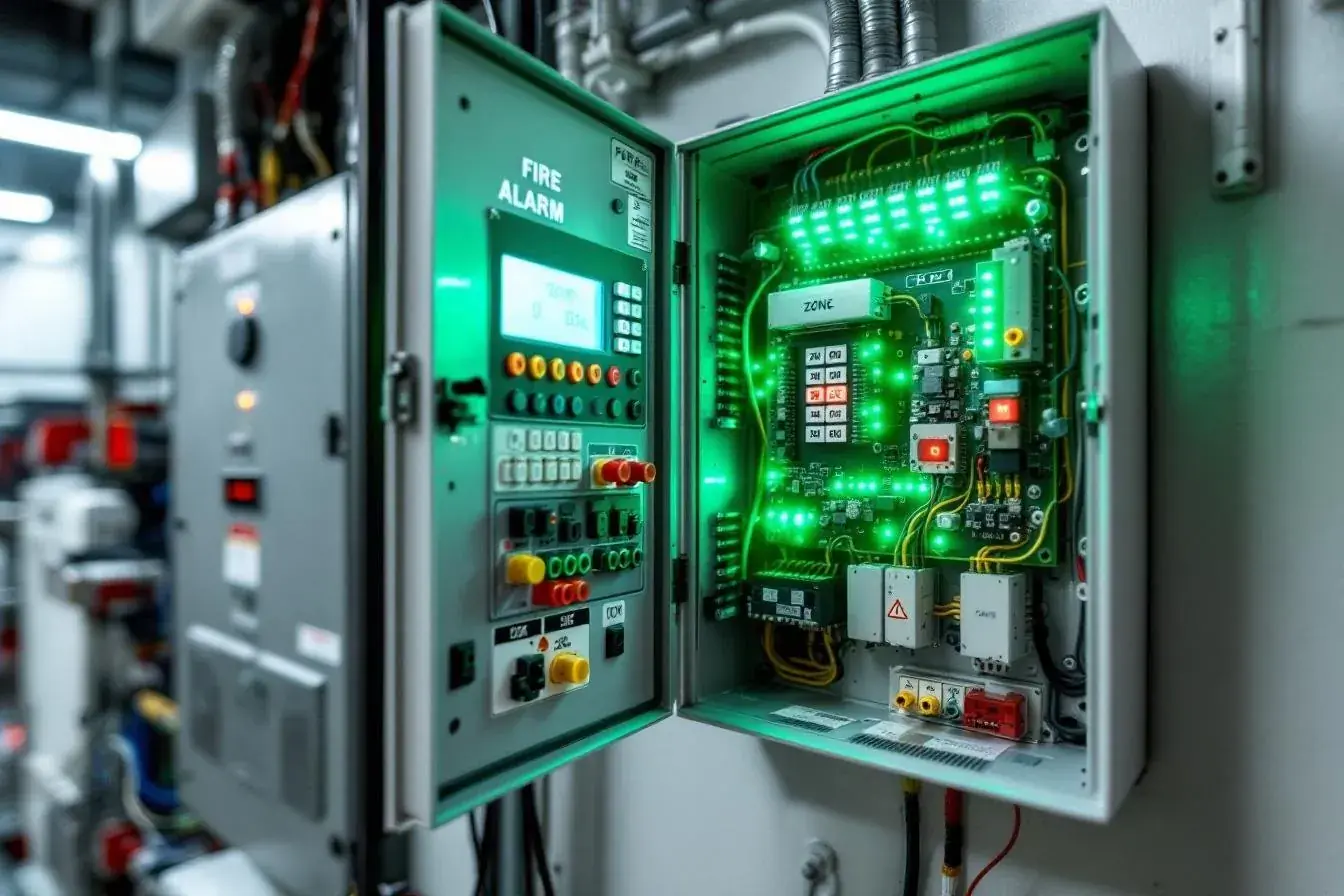
- Fire alarm control panel (FACP), the system's brain
- 24/7 central station monitoring connection (cellular and/or internet based)
- Direct connection to local fire dispatch where required
Required Inspections and Testing
NFPA 72 mandates scheduled testing. The specifics vary by component:
- Central station monitoring: tested weekly (supervisory signal verification)
- Control panel batteries: load tested annually
- Smoke detectors: sensitivity tested every 2 years after the first year of service
- Heat detectors: tested annually
- Pull stations: tested annually
- Notification appliances: tested annually
- Full system: annual comprehensive inspection
All inspections must be documented. Inspection reports need to be kept on site and produced during annual fire code inspections.
What Most Often Fails Fire Inspections
- Missing or incomplete inspection records. The system can be working perfectly, but without documented annual inspections, you're non compliant.
- Expired or untested smoke detectors. Detectors older than 10 years or lacking recent sensitivity testing are standard writeups.
- Notification appliance coverage gaps. Additions, renovations, or reconfigurations often create areas without adequate audible/visible coverage.
- Control panel batteries past their service life. Batteries typically need replacement every 4 to 5 years.
- Blocked or missing pull stations. Often happens when furniture or equipment moves around.
- Monitoring connection failures. Phone line monitoring that hasn't been transitioned to cellular or IP.
- Trouble conditions ignored. Panels showing trouble that went unaddressed between inspections.
When Building Changes Trigger System Updates
Even a fully compliant system can become non compliant when the building changes. Triggers include:
- Change of occupancy or use group. Converting office to assembly space (adding a cafeteria, fitness center, etc.) typically triggers review.
- Floor plan changes. Adding walls, subdividing space, or significant reconfiguration can create coverage gaps.
- Sprinkler installation. Any sprinkler addition requires integration with supervising fire alarm.
- HVAC changes. New ductwork, AHUs, or significant airflow changes trigger duct detector requirements.
- Adjacent tenant changes. In multitenant buildings, an adjacent occupancy change can impact your coverage obligations.
The Costs of Non Compliance
- Fines from the Local Enforcing Agency for code violations
- Loss of Certificate of Occupancy in serious cases
- Insurance consequences, carriers may reduce coverage or deny claims related to fire events on non compliant systems
- Civil liability if a fire event occurs and inadequate system is a contributing factor
- Business interruption during forced closures for remediation
Getting Compliant (or Staying That Way)
The practical path:
- Start with an assessment. A qualified fire alarm company walks the property, reviews records, and identifies gaps between current state and code.
- Document everything. Inspection records, maintenance logs, change of occupancy filings, all of it needs to be organized and available.
- Address deficiencies methodically. Some fixes are quick (replace expired detectors). Others are projects (adding notification coverage to a renovated area).
- Schedule required inspections with a qualified contractor. NICET certified technicians are the standard for NJ fire alarm work.
- Keep monitoring current. UL Listed central station monitoring with cellular/IP primary and secondary paths.
How Certified Protection Handles NJ Commercial Fire
We're a Silent Knight installer and dealer with four decades of NJ fire alarm experience. NICET certified technicians, UL Listed monitoring, inspection documentation that satisfies any NJ fire official, and the kind of hands on service you only get from a family owned specialist. Commercial fire alarm assessments for buildings in Edison, Woodbridge, New Brunswick, Princeton, Morristown, and anywhere else in NJ. Call 732-346-5333.