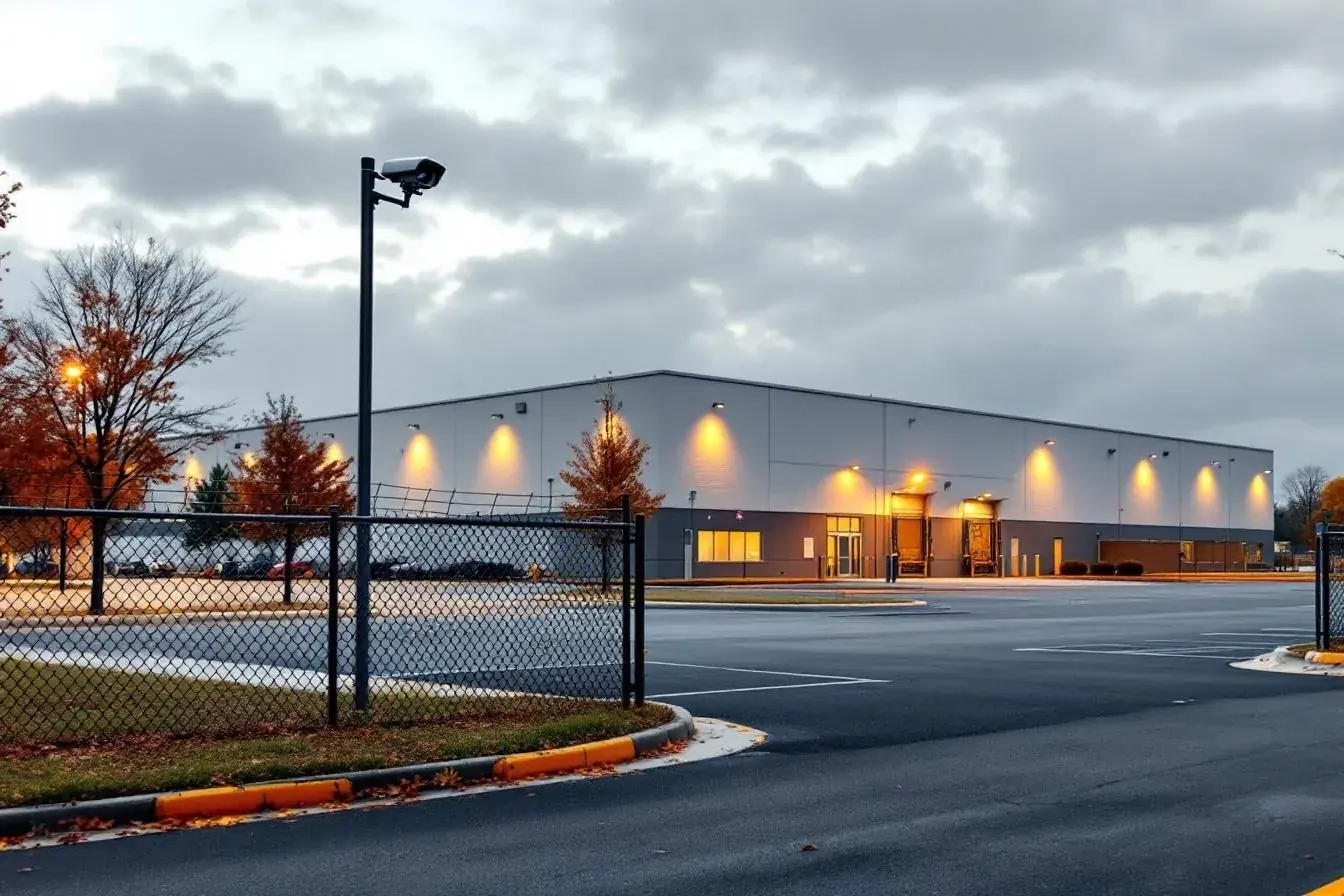
- New Jersey's warehouse boom demands serious security.
- Access control, surveillance, fire detection, and monitoring strategies for NJ distribution centers and logistics hubs.
- Questions about your property? Certified Protection answers them free: 732-346-5333.
The NJ Warehouse Boom, and Why Security Can't Wait
New Jersey added more than 30 million square feet of warehouse and distribution space between 2021 and 2025, with another wave of development underway across the Central Jersey corridor. Amazon, FedEx, Walmart, and dozens of third party logistics companies have made NJ the linchpin of East Coast fulfillment, and every one of those facilities represents a target.
Warehouse theft nationally exceeds $15 billion annually. In New Jersey specifically, the concentration of high value goods moving through the Turnpike corridor makes distribution centers attractive targets for organized theft rings. Add employee theft, cargo fraud, and the operational risks inherent to 24/7 facilities, and the business case for comprehensive security is overwhelming.
The problem isn't awareness, most facility managers know they need security. The problem is that many warehouses are running patchwork systems that were installed piecemeal as the facility grew. A few cameras here, a keypad on the main door there, maybe a basic alarm. That's not a security system, it's a collection of parts.
The Four Pillars of Warehouse Security
1. Perimeter and Access Control
The biggest vulnerability in most warehouses is who gets in and out. During peak operations, dozens or hundreds of people, employees, temps, drivers, vendors, move through the facility. Without proper access control, there's no record of who was where, and no ability to restrict access to sensitive areas.
A modern warehouse access control system uses credential based entry, keycards, fobs, or mobile credentials, at every access point. Loading docks, employee entrances, office areas, server rooms, and high value storage zones should each have independently controlled access. Every entry and exit is logged with timestamps, creating an audit trail that's invaluable for both security and operations. Read our full access control overview for how we approach this.
2. Video Surveillance
Cameras in a warehouse serve three functions: deterrence (visible cameras reduce internal theft by 50-70%), investigation (reviewing footage after an incident), and operational monitoring (tracking workflow, verifying shipments, documenting loading procedures).
Key camera positions for warehouses include dock doors (capturing every truck and load), high value storage areas, employee entry/exit points, parking lots, and perimeter fencing. Resolution matters, a 4MP camera that can read a license plate at 40 feet is worth ten low res cameras that show blurry shapes. See our guide to choosing the right surveillance system for detailed specifications.
3. Fire Detection and Suppression Monitoring
Warehouses present unique fire risks, stored goods, packaging materials, forklifts, electrical systems, and sometimes hazardous materials. New Jersey fire codes require commercial fire alarm systems with central station monitoring for most warehouse facilities, with specific requirements varying by occupancy classification, stored materials, and square footage.
Your fire system should integrate with your security monitoring so that a single central station handles both. When a fire alarm triggers, the monitoring center contacts the fire department, notifies facility management, and can trigger access control overrides to unlock emergency exits. We cover the code requirements in detail in our NJ fire alarm code guide.
4. 24/7 Central Station Monitoring
A security system without monitoring is a recording device, not a protection system. 24-hour central station monitoring means trained operators respond to every alarm, verifying intrusions, dispatching police, contacting facility managers, and maintaining communication throughout any incident. Our monitoring service provides UL Listed, CSAA Five Diamond certified monitoring from our own central station.
Integration Is Everything
The difference between a collection of security products and a security system is integration. When your access control, surveillance, fire detection, and monitoring all communicate with each other, you get capabilities that standalone components can't provide.
Example: an access control badge swipe at a dock door triggers the nearest camera to begin recording at high resolution. An after hours door forced open triggers an alarm, pulls up live video at the monitoring station, and sends a push notification to the facility manager. A fire alarm in Zone 3 unlocks all emergency exits, triggers the suppression system, and dispatches the fire department, all automatically.
That's what an integrated system does. And it's what we design for every commercial client, from a 10,000 square foot warehouse to a 500,000 square foot distribution campus.
NJ Specific Considerations
New Jersey's proximity to major ports (Newark, Elizabeth), airports (EWR, JFK corridor), and the Turnpike/Parkway interchange system means warehouses here handle higher value cargo than typical facilities. That elevates the security requirements, and the expectations of insurance carriers.
Many NJ commercial insurance policies now require specific security measures as a condition of coverage, including monitored intrusion alarms, video surveillance with minimum retention periods, and documented access control. Installing a comprehensive system before your insurer requires it often results in lower premiums, a direct ROI on the security investment.
We've secured warehouses and distribution centers across Central New Jersey for more than 40 years. If you're building a new facility, expanding an existing one, or upgrading an aging system, call us at 732-346-5333 for a free security assessment.