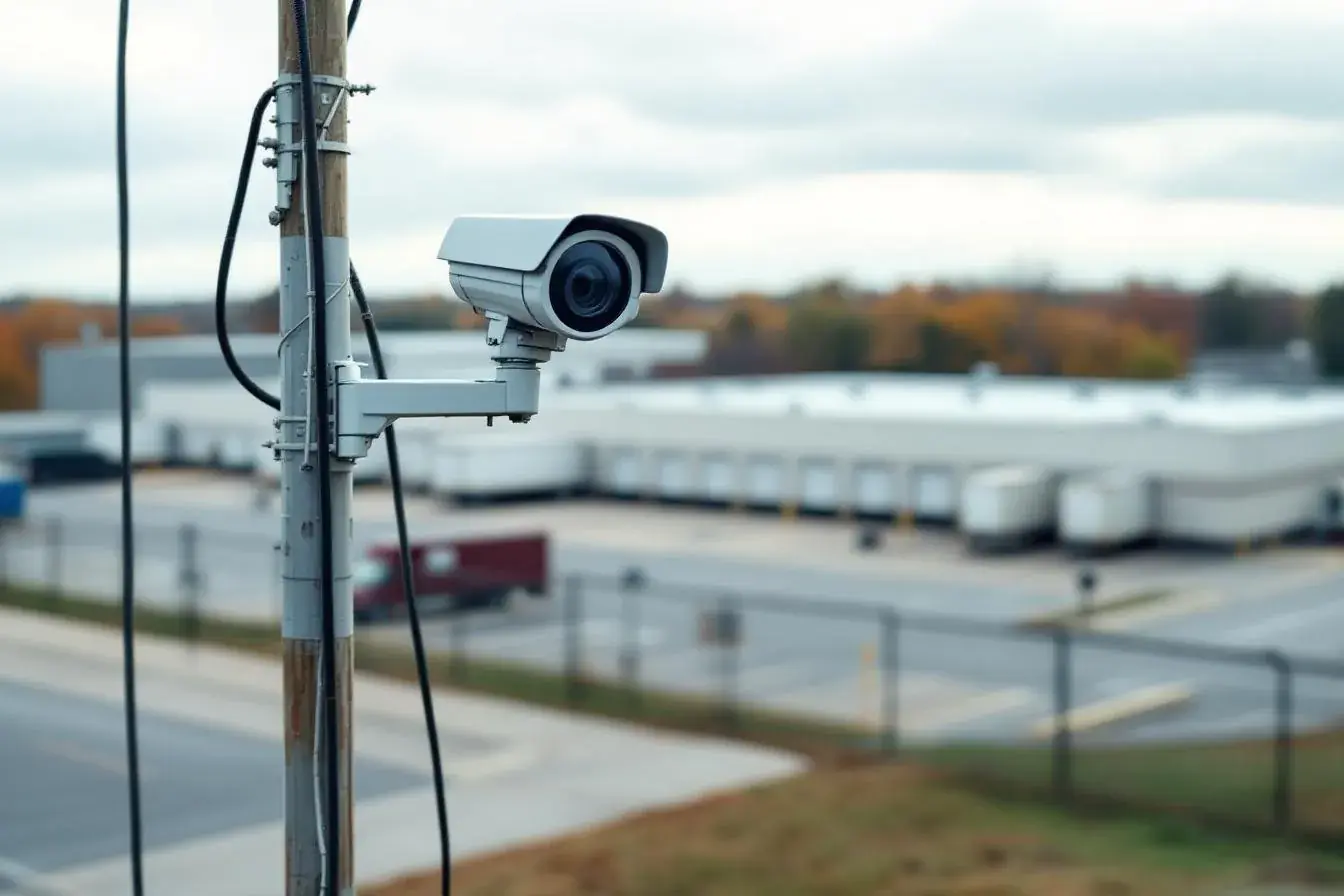
- The definitive guide to security camera placement for NJ homes.
- Front door, driveway, backyard, garage | where cameras go and why, from a 40-year NJ security company.
- Questions about your property? Certified Protection answers them free: 732-346-5333.
The Priority Positions
Not all camera positions are equal. If budget limits the number of cameras you can install, prioritize these positions in this order. Each one protects against the most statistically common threats to NJ homes.
1. Front Door
Roughly 34% of burglars enter through the front door. It's also where 100% of your packages are delivered, where visitors arrive, and where most homeowner interactions with the outside world happen. A front door camera is non negotiable, it's your single highest value camera position.
Mount the camera 7-8 feet high, angled slightly downward to capture faces clearly. Avoid pointing it directly into the sun's path (east facing in the morning, west facing in the evening) to prevent glare and washed out footage. A camera with WDR (Wide Dynamic Range) handles the contrast between shaded porches and bright driveways.
2. Driveway and Street Facing
Your driveway camera captures vehicles approaching and leaving, license plates, make, model, and color. It also covers the most common approach path for anyone casing your home. In NJ's suburban neighborhoods, the driveway is the primary interface between your property and the public.
Mount this camera at the garage eave or corner of the home, angled to capture the full driveway length. For license plate capture, the camera needs to be close enough to the street to read plates at the resolution your system supports, typically within 25-40 feet for a 4MP camera.
3. Backyard / Rear Entry
22% of burglars enter through back doors. The backyard is also the area least visible to neighbors and passersby, making it the most common entry point for experienced burglars who avoid the front of the home. A rear facing camera covers the back door, patio doors, basement windows, and general backyard activity.
NJ backyards often have fences, sheds, and tree cover that create blind spots. Position the camera at the second floor eave or highest point of the rear wall, angled to capture the widest possible view. IR (infrared) capability is essential, backyards are typically darker than front areas at night.
4. Side Yards and Gates
The narrow passages along the sides of NJ homes, between the house and the fence, are commonly used as access paths by burglars moving from the street to the backyard without being seen. A camera covering each side yard eliminates this blind spot.
These cameras need good low light performance because side yards are typically shaded and narrow. A camera with strong IR illumination or starlight sensor technology works best here.
5. Garage Interior
If your garage connects to your home (most NJ homes), it's both a storage area for valuable items and a potential entry point. An interior garage camera captures anyone entering through the garage door, which is the entry point in roughly 9% of burglaries.
Common Placement Mistakes
Too high. A camera mounted at the roofline captures the tops of heads, not faces. Keep cameras at 7-10 feet for facial identification. Higher than that and you're recording scalps.
Pointed at the sky. Cameras angled too far upward waste most of their field of view on sky and trees. Angle them 15-30 degrees below horizontal for optimal ground coverage.
No night vision consideration. NJ has four distinct seasons, and winter means 15 hours of darkness per day. Every exterior camera needs IR or starlight capability. Test your camera's night performance before you commit to a position.
WiFi dead zones. Consumer wireless cameras at the far end of a large NJ home may be outside reliable WiFi range. Test signal strength at each planned camera position. Better yet, use hardwired cameras that don't depend on WiFi.
How Many Cameras Do You Need?
For most NJ single family homes, 4-6 cameras provide comprehensive coverage. A typical configuration: front door, driveway, backyard, one side yard, and garage interior. Larger properties, corner lots, or homes with pools, detached garages, or extensive landscaping may need 8-10.
We've been installing camera systems on NJ homes for over four decades. Every home is different, lot shape, sun exposure, landscaping, neighboring structures, and every camera placement plan should reflect that. Call us at 732-346-5333 for a free walkthrough. We'll map your property, identify the ideal camera positions, and give you a clear quote with no surprises.