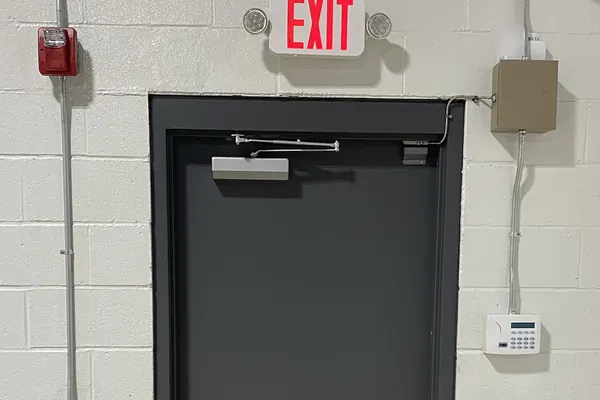
- You can control who comes in through an exit door. You generally cannot stop anyone from getting out. That one rule decides almost every access control design on an egress door.
- Electric strikes and electrified exit hardware keep mechanical free egress and are the simplest to get approved. Mag locks and delayed egress are allowed, but only with specific release conditions.
- Any lock tied to an exit door should also be tied to the fire alarm. Call 732-346-5333 before you add hardware to an exit.
The Short Answer
Yes, you can lock an exit door against entry. What you cannot do, under the building and fire codes New Jersey adopts, is make it hard to get out. In general, a door in the path of egress has to open from the inside without a key, a tool, special knowledge, or unusual effort. Locking the outside is fine. Trapping people inside is not.
That sounds simple, and with the right hardware it is. Problems start when a business adds a lock for a security reason (theft out the back door, after-hours access, a stockroom) without thinking about the egress side.
What a Well-Equipped Exit Looks Like
The door below is a good example of fire and security sharing one opening without fighting each other.
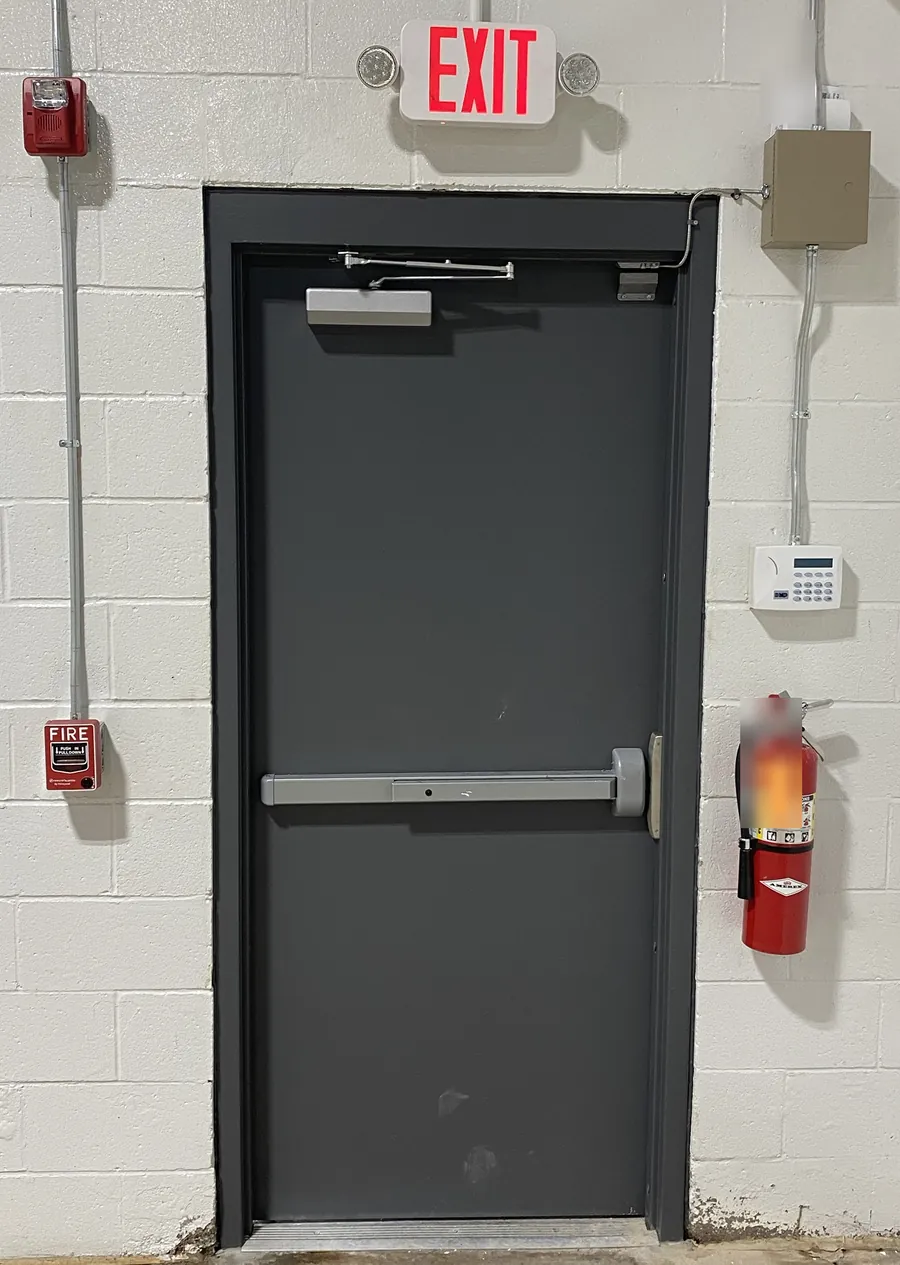
- Panic hardware. Push the bar and the door opens, every time, from the inside.
- Exit sign with battery-backed lights. Visible in a power outage.
- Pull station near the exit. Fire codes generally place manual pull stations within a few feet of each exit door.
- Horn strobe. Notification that people can see and hear on the way out.
- Intrusion keypad and door contact. The security side: the door is monitored, and opening it after hours is an alarm event.
Three Ways to Control an Exit Door
1. Electric strike or electrified exit hardware
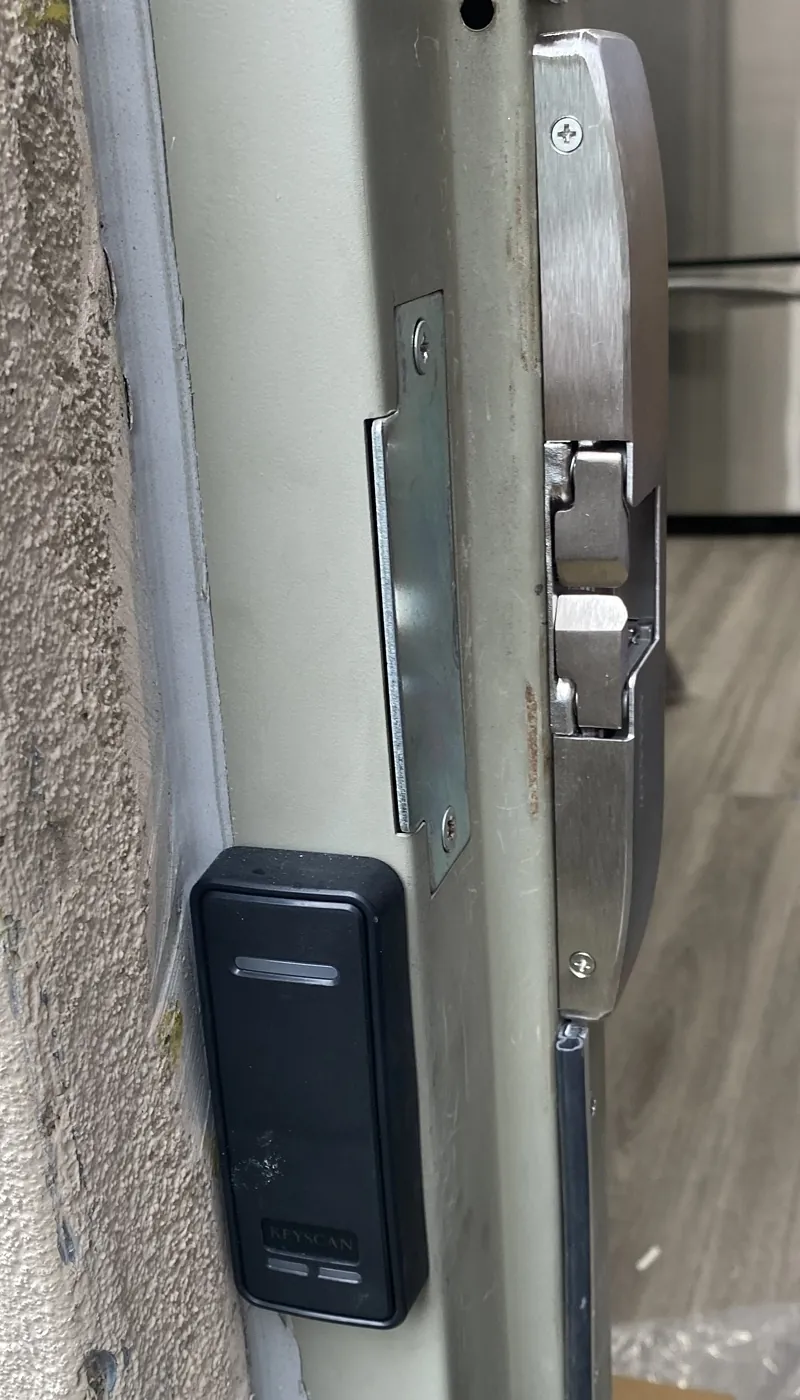
This is the most common setup and the easiest to approve. The card reader controls the outside. From the inside, the lever or panic bar always works mechanically, whether the power is on or off. Because free egress never depends on electricity, the strike can usually be fail-secure: during a power outage the outside stays locked while people can still walk out.
2. Magnetic locks
A mag lock holds the door shut with an electromagnet, so there is no mechanical way through it while it is powered. Because of that, codes generally attach conditions to using one on an egress door: a sensor on the inside that releases the lock as someone approaches, automatic release on loss of power, a manual push-to-exit button near the door that cuts power to the lock directly, and release when the fire alarm or sprinkler system activates. A mag lock missing any of those is one of the most common things a fire inspector flags.
3. Delayed egress
Delayed egress hardware lets a business slow down exits at specific doors, such as a retail stockroom or a healthcare unit. Pushing the bar sounds a local alarm and starts a short delay, typically 15 seconds, before the door releases. It is only allowed in certain occupancies and buildings with fire protection in place, it needs specific signage on the door, and it must release immediately on fire alarm activation or power loss. Your local fire official decides whether a given door qualifies.
The Fire Alarm Tie-In
Any electrified lock that could slow egress should drop when the fire alarm goes into alarm. In practice that means a relay from the fire alarm panel to the access control power supply, and that relay gets tested during the annual inspection. When access control and fire alarm are installed by different companies, this connection is where things fall through the cracks. It is also a frequent item in our post on why NJ buildings fail fire alarm inspections.
Mistakes We See on Exit Doors
- Chains, padlocks, or a slide bolt added to a back door to stop theft. Never acceptable while the building is occupied.
- A keyed deadbolt added above panic hardware. It defeats the panic bar entirely.
- A mag lock with only a motion sensor and no manual push-to-exit button, or one that does not release on fire alarm.
- Blocked or propped exits. Stock stacked in front of a door, or a door wedged open so a fire door no longer closes.
- Hardware added without a permit. Changing locking hardware on an egress door, or tying it into the fire alarm, often needs approval from the local construction or fire official. Our NJ fire alarm code guide covers the basics.
Getting It Right the First Time
The cleanest designs start with the door: what it is, who needs to get in, and what the code requires for getting out. From there the hardware choice is usually obvious. If you are planning a renovation, read our post on fire alarms during a commercial renovation too, because door hardware and fire alarm changes usually land in the same permit. Our access control page covers the systems we install.
We design and install access control and fire alarm systems for businesses in Edison, Woodbridge, New Brunswick, Piscataway, and across Middlesex, Monmouth, Union, Somerset, Essex, and Morris counties. Call 732-346-5333 or use the form below.