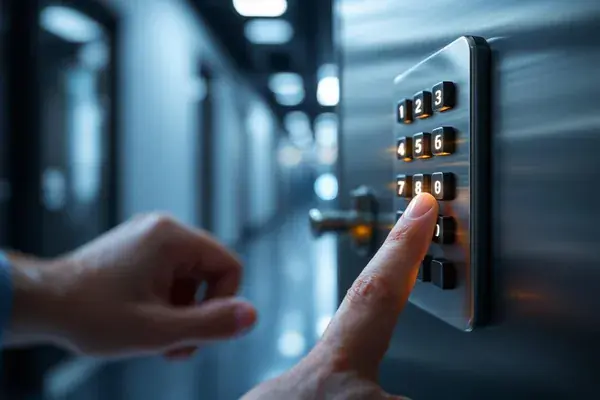
- Daylight saving time ends Sunday, November 1, 2026. Sunset in central NJ drops to around 4:45pm, and the highest-risk burglary window moves to late afternoon and early evening.
- The problem is not darkness itself. It is a dark, quiet house during the hours when a burglar can still walk up a driveway without looking strange.
- Lighting on a schedule, a camera that actually sees at night, and an alarm you arm even when you are home. Call 732-346-5333 to get set before November.
What Actually Changes on November 1
Clocks fall back one hour and sunset in Middlesex County moves from around 5:55pm to about 4:45pm overnight. By early December it is under 4:35pm. For roughly six weeks most people in New Jersey leave work in daylight and arrive home in the dark.
Residential burglary is overwhelmingly a daytime crime because empty houses are the target, and most houses are empty between 9am and 4pm. What the time change does is extend the useful window. A burglar working at 5:15pm now has cover of darkness plus a decent chance the house is still empty. Add the fact that a dark house at 6pm is visible from the street as unoccupied, and late afternoon becomes the pressure point.
This is the mirror image of what we wrote about in our post on summer burglary patterns in NJ. Summer risk comes from long vacations. Fall and winter risk comes from a predictable daily gap that repeats every weekday.
Lighting Is the Cheapest Fix and Most People Skip It
An occupied-looking house is a house that lights up before anyone gets home. Specifics:
- Interior: two lamps on smart plugs or timers, in rooms visible from the street, set to come on around 4:30pm. Vary them if your system supports it. A single lamp that flicks on at exactly 4:30 every day for three months reads as automated to anyone watching.
- Exterior: dusk-to-dawn bulbs at the front and back doors. These are not security theater. Most residential entries happen at a door, and a lit door is a door a burglar has to work at in full view.
- Motion floods: driveway, side yard, and any approach that is not visible from a neighbor's window. Motion is the point, since a light that suddenly comes on suggests someone noticed.
If your alarm system supports automation, we can tie lighting to the alarm so arming in Away mode triggers the evening lighting schedule automatically. That removes the part people forget.
Your Camera May Not See What You Think at Night
Standard infrared night vision gives you a grayscale image. It is fine for detecting that a person was there. It is often useless for identifying who, because you lose clothing color, vehicle color, and fine detail exactly when you need them.
Color-at-night cameras use a larger sensor and a low-level white light to hold full color down to very low light. We wrote up a commercial install using these at an Edison warehouse, and the difference in usable footage is not subtle. For a home, one good color-at-night camera covering the driveway and front approach is worth more than four cheap cameras in grayscale.
Check your existing cameras now, in the dark, not in daylight. Stand where a person would stand and see whether you could describe yourself from the footage. Our guide on camera placement for NJ homes covers angles and heights.
Arm the System When You Are Home
This is the habit almost nobody has, and fall is when it starts to matter. Stay mode arms your perimeter, doors and windows, while leaving interior motion detectors off so you can move around freely. From late afternoon through the night, a perimeter-armed house catches an entry the moment it happens rather than after someone is already inside.
Evening entries while people are home are rarer than daytime burglaries, but they are the ones that turn into confrontations. Stay mode costs nothing and it is one button.
Mind the Commute Gap
If you leave at 7am and get home at 6pm, your house is unoccupied for eleven hours, three of them dark. Two things close that gap:
- Entry alerts on your phone for the doors that should not open during the day. A back door notification at 2pm while you are at work is actionable information.
- Monitored response so a signal goes to a central station whether or not you are looking at your phone. This is the difference between a recording and a dispatch. Our monitoring page explains how verification cuts false dispatches.
Packages Stack Up in the Dark
Deliveries in November and December often arrive after sunset, which means a package sits visibly on a porch in the dark for hours. That is a separate problem from burglary and it has separate fixes: delivery alerts, a lockbox, a neighbor, or a rerouted delivery address. Our post on porch pirates in NJ covers what works.
Get Ahead of It in October
Everything above is easier to do in October than in a dark driveway in November. If you want a hand, a fall system check covers the sensor test, battery replacements, night camera verification, lighting schedule, and app notification setup in about an hour. Our full fall home security checklist lists the rest.
We are a family owned company in Edison serving Middlesex, Monmouth, Union, Somerset, Essex, and Morris counties. Call 732-346-5333 or use the form below.