- Not every commercial building needs smoke detectors on every ceiling. Requirements depend on the occupancy type, how many people the building holds, whether it is sprinklered, and a handful of specific spaces.
- A code-required "fire alarm system" often means pull stations, horn strobes, and sprinkler monitoring, not area-wide smoke detection. But a few detectors show up in almost every commercial building anyway.
- Store-bought smoke alarms do not satisfy a commercial detection requirement. Call 732-346-5333 for a review of what your building actually needs.
- Smoke Alarm or Smoke Detector? The Difference Matters
- When Is Smoke Detection Required in a Commercial Building?
- Where Smoke Detectors Show Up Even When the Building Does Not Need Them Everywhere
- The Sprinkler Trade-Off
- Where Smoke Detectors Go: The NFPA 72 Basics
- Renovations and Tenant Changes Break Coverage
- Testing and Maintenance
- How to Find Out What Your Building Needs
- Questions People Ask
Smoke Alarm or Smoke Detector? The Difference Matters
People use the two terms interchangeably, but the codes do not, and the difference changes what you are required to install.
- A smoke alarm is a self-contained device. It senses smoke and sounds its own built-in horn. Smoke alarms are what codes require in homes, apartments, and hotel rooms, anywhere people sleep.
- A smoke detector is a sensor on a fire alarm system. It does not make noise by itself. It reports to the fire alarm control panel, which sounds horn strobes throughout the building, recalls elevators, shuts down air handlers, and sends the signal to a central monitoring station.
When a New Jersey commercial building is required to have smoke detection, it almost always means detectors on a monitored fire alarm system. Battery smoke alarms bought at a hardware store and screwed to an office ceiling do not meet that requirement, and an inspector will not count them.
When Is Smoke Detection Required in a Commercial Building?
New Jersey enforces the International Building Code, through the Uniform Construction Code, for new construction and alterations, and the New Jersey Uniform Fire Code for existing buildings. Under those codes, the question is answered by occupancy group, occupant load, and sprinklers, not by a single blanket rule.
The most common misunderstanding is that "the building needs a fire alarm" means "the building needs smoke detectors everywhere." For many offices and stores it does not. The table below shows when a fire alarm system is generally required for common commercial occupancies under the 2021 IBC, which is the model code New Jersey currently builds on.
| Building type | Fire alarm system generally required when | Typical note |
|---|---|---|
| Business (offices, Group B) | Combined occupant load of all floors is 500 or more, or more than 100 people above or below the lowest level of exit discharge | Pull stations can be omitted in a fully sprinklered building if sprinkler waterflow sounds the alarm |
| Mercantile (retail, Group M) | Combined occupant load of 500 or more, or more than 100 above or below the level of exit discharge | Same sprinkler trade-off as offices in most cases |
| Assembly (restaurants, venues, Group A) | Occupant load of 300 or more | Lower thresholds and voice evacuation can apply in larger venues |
| Educational (schools, Group E) | Generally any school above 50 occupants | NJ schools also have Alyssa's Law panic alarm requirements |
| Ambulatory care (outpatient surgery and similar) | Any fire area containing the facility | Automatic smoke detection throughout is required, not just a manual system |
Simplified from the 2021 International Building Code, Section 907.2. New Jersey amendments, your building's approvals, and your local fire official determine the final answer.
Notice what those rules usually require: a manual fire alarm system, meaning pull stations and occupant notification. Automatic smoke detection throughout the building is the exception, reserved for uses like ambulatory care, healthcare, and sleeping occupancies, or for buildings where the system design or the fire official calls for it.
Where Smoke Detectors Show Up Even When the Building Does Not Need Them Everywhere
Even a sprinklered office with no area-wide detection usually has a few smoke detectors. They are required for a specific job in a specific spot:
| Location | Why detection shows up here | Common in |
|---|---|---|
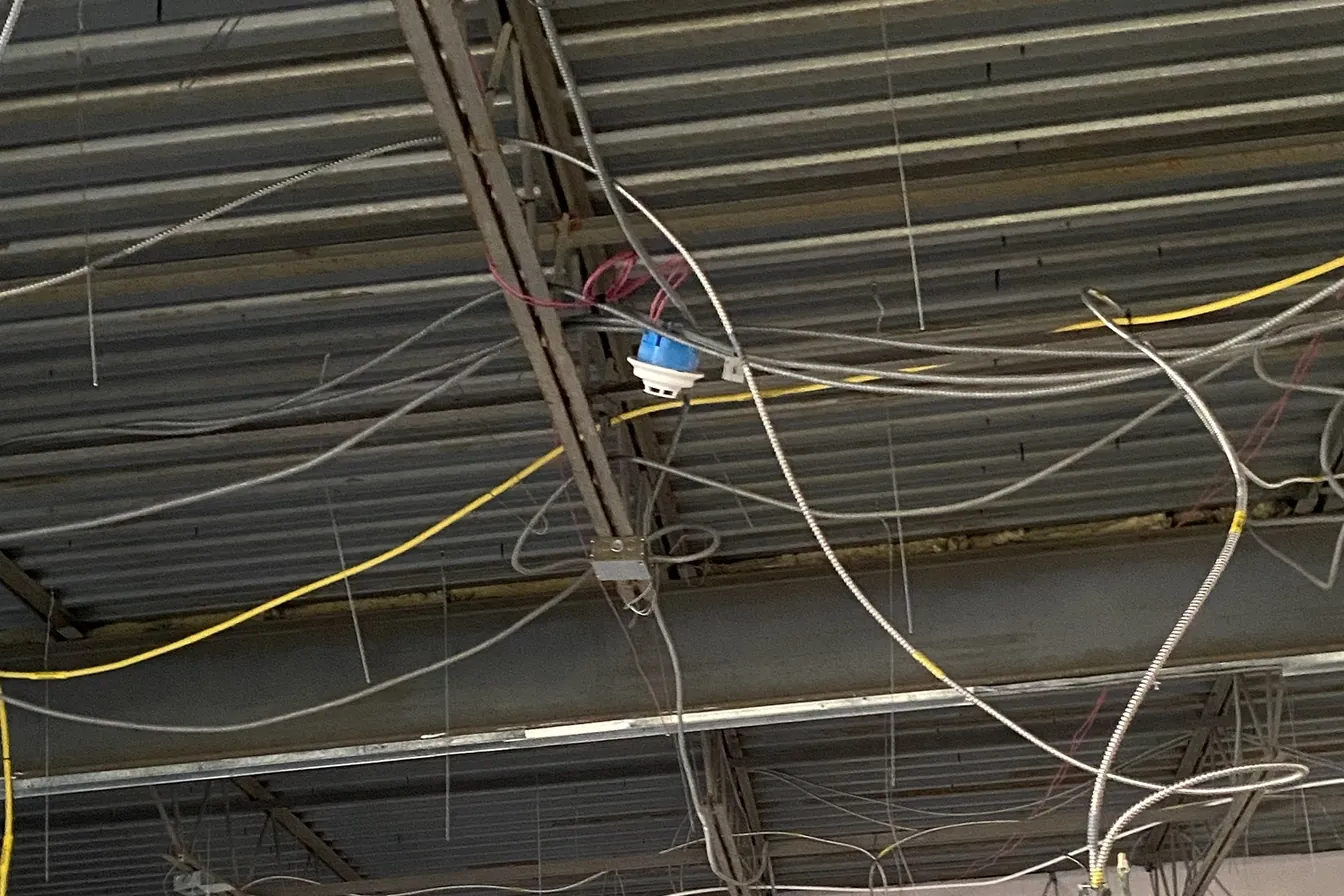
| At the fire alarm control panel | NFPA 72 calls for smoke detection at the panel location when that area is not continuously occupied, so a fire cannot take out the panel unnoticed | Almost every commercial system |
| HVAC returns over 2,000 CFM | The mechanical code requires duct smoke detection to shut down larger air handlers so they do not spread smoke through the building | Offices, retail, medical |
| Elevator lobbies and machine rooms | Detectors trigger elevator recall so cars do not open onto a fire floor | Any building with elevators |
| Fire and smoke doors held open | Detectors release magnetic hold-opens so the doors close in a fire | Corridors, stairwells, warehouses |
| Spaces the code singles out | Atriums, high-rises, sleeping areas, and certain high-hazard uses carry their own detection rules | Hotels, healthcare, larger buildings |
The Sprinkler Trade-Off
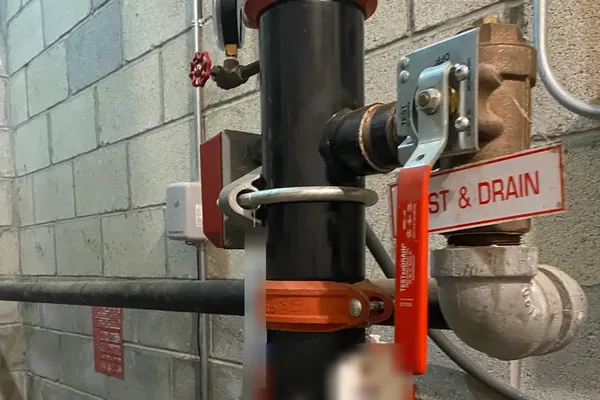
In a fully sprinklered building, the sprinkler system is the primary fire protection, and the waterflow switch on the riser becomes the main fire alarm signal. That is why the codes let many sprinklered offices and stores skip pull stations, as long as sprinkler waterflow activates the horn strobes everywhere.
The trade-off is timing. Sprinklers respond to heat, which means a fire is already burning when they open. Smoke detection responds earlier, often while a fire is still smoldering. For most of a sprinklered building, the code accepts that. For spaces where minutes matter, many owners add detection anyway:
- Server and network rooms, where smoke damage alone can take the business offline.
- Records storage and high-value inventory.
- Buildings that sit empty overnight, where nobody is around to smell smoke.
- Warehouses with high ceilings, where heat takes longer to reach the sprinkler heads. Our post on warehouse fire protection covers beam and air-sampling detection for those spaces.
Where Smoke Detectors Go: The NFPA 72 Basics
When detectors are required, NFPA 72, the National Fire Alarm and Signaling Code, governs where they go. A few rules drive most layouts:
- Spacing. On a smooth, flat ceiling, spot smoke detectors are commonly laid out on a 30 foot spacing, with every point on the ceiling within 0.7 times that spacing (about 21 feet) of a detector.
- Wall mounting. When a detector goes on a wall instead of the ceiling, the top of the detector sits between 4 and 12 inches below the ceiling. Ceiling-mounted detectors stay at least 4 inches off the wall.
- Airflow. Detectors should stay out of direct airflow and away from supply diffusers and return grilles, generally at least 3 feet. Air blowing across a detector can push smoke away from it.
- Ceiling shape. Beams, joists, sloped ceilings, and high ceilings all change the spacing. A warehouse or a building with deep beams needs an engineered layout, not the 30 foot rule.
- The wrong environment. Kitchens, garages, dusty loading docks, and boiler rooms produce nuisance alarms on smoke detectors. Heat detectors are usually the right call there.
Renovations and Tenant Changes Break Coverage
Detector layouts are designed around walls and ceilings as they existed on the drawings. Add a wall and a detector that covered one room now covers half of two. Drop a ceiling, move an HVAC diffuser, or convert open office into private offices, and the coverage may no longer meet code. A change of use, such as office space becoming a medical practice, can add detection requirements that did not exist before. Our guide to fire alarms during a commercial renovation covers the permit side.
Testing and Maintenance
Commercial smoke detectors are tested as part of the annual fire alarm inspection. NFPA 72 also requires a sensitivity check, done within a year of installation and every other year after that, to confirm each detector is neither too dull to catch smoke nor so sensitive it causes false alarms. Detectors that are dirty, painted over, or still wearing construction dust covers are among the most common inspection failures; see why NJ buildings fail fire alarm inspections.
Standalone smoke alarms in dwelling units get replaced every 10 years. System smoke detectors are handled through sensitivity testing instead, though many manufacturers recommend replacing them at around the 10 year mark. Our post on how often commercial fire alarms need inspection has the full schedule.
How to Find Out What Your Building Needs
- Find the approved fire alarm drawings from the last permit. They show what was required and where.
- Know your occupancy group and occupant load. Your certificate of occupancy usually lists the use group.
- Confirm sprinkler status. Fully sprinklered, partially sprinklered, or not at all changes nearly every answer above.
- Have a licensed fire alarm contractor review it before you renovate, change tenants, or change how the space is used. The local fire official has the final say, and a contractor who works with your town regularly knows how they read the code.
Our NJ commercial fire alarm code guide covers the wider system, and our fire alarm services page covers what we install. We design, install, and inspect commercial fire alarm systems in Edison, Woodbridge, New Brunswick, Piscataway, and across Middlesex, Monmouth, Union, Somerset, Essex, and Morris counties. Call 732-346-5333 or use the form below.