
- Any renovation that moves walls, adds rooms, changes ceilings, or changes how a space is used almost always means fire alarm work too. It is easy to forget until the inspector asks.
- In New Jersey, fire alarm alterations generally need a fire protection permit and inspection under the Uniform Construction Code, and the space cannot be fully signed off without it.
- Bring the alarm contractor in at the drawing stage, not after the drywall goes up. Call 732-346-5333 for a fit-out walk-through.
Why Renovations Touch the Fire Alarm
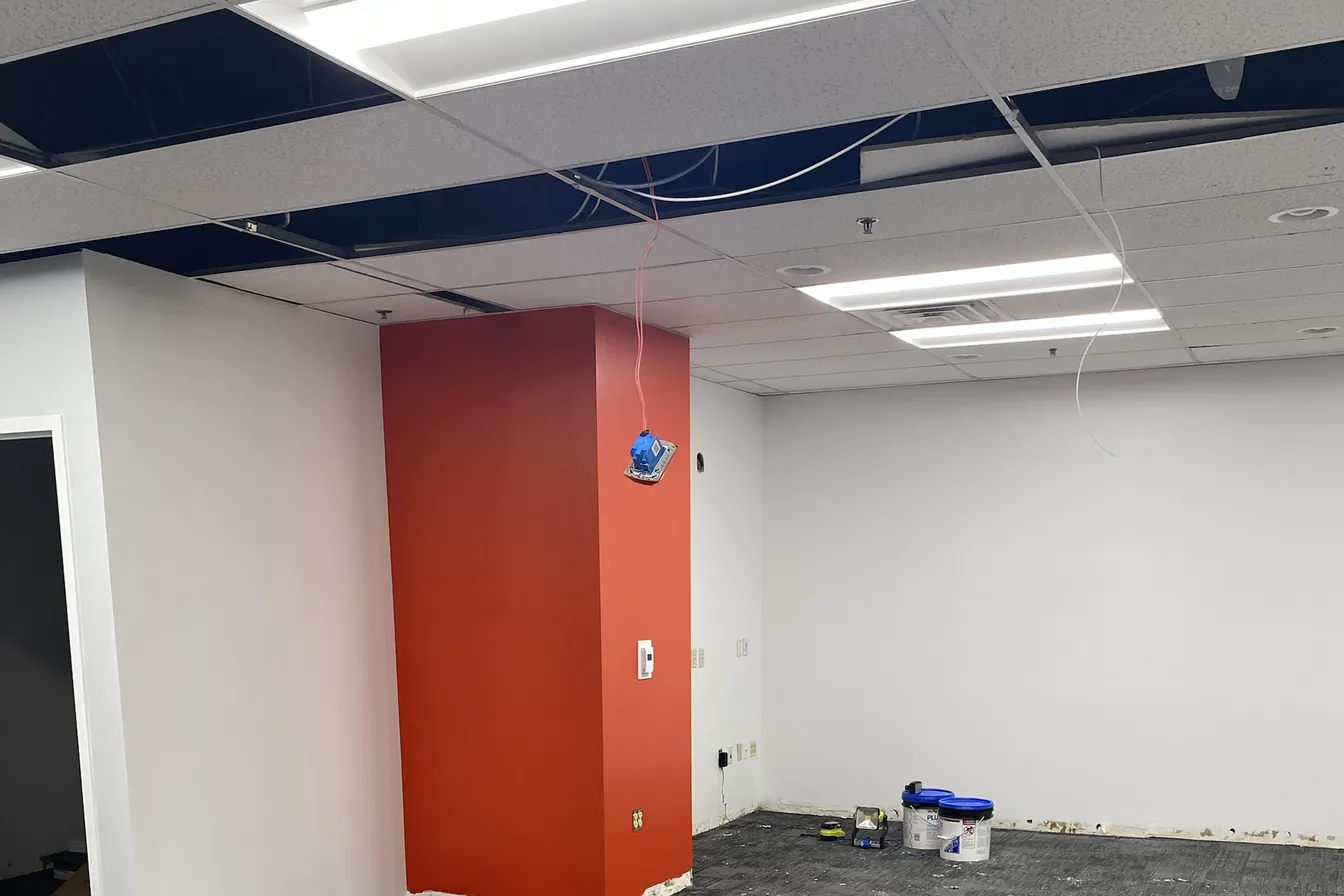
A fire alarm system is designed around a specific floor plan. Smoke detectors are spaced for particular ceiling layouts, horn strobes are placed so every room and corridor can see and hear them, and pull stations sit at specific exits. When a renovation moves a wall, splits one big room into three offices, or lowers a ceiling, that design no longer matches the building.
Common changes that trigger alarm work:
- New walls or rooms. A new conference room or private office usually needs its own notification coverage, because a strobe on the other side of a wall does nothing for the people inside.
- Ceiling changes. Dropping or raising a ceiling, adding soffits, or changing tile layouts affects detector spacing.
- HVAC changes. New or relocated air handlers can require duct smoke detectors, and detectors too close to supply vents get blown out of position and stop working the way they should.
- Change of use. Converting office space to assembly, retail, medical, or storage changes what the code requires altogether.
- A bigger system. Adding devices can push an older panel past its capacity or its power supply past its limits.
Permits and Inspections in New Jersey
In New Jersey, fire alarm alterations are generally covered by the Uniform Construction Code and handled through the local fire protection subcode official. In practice that means drawings, a permit, and a final inspection before the space is signed off for occupancy. On a tenant fit-out the fire alarm is often one of the last approvals, so getting it wrong delays the whole move-in.
The details vary by town, which is exactly why a local contractor matters. A licensed NJ fire alarm installer prepares the drawings, pulls the permit, coordinates the inspection, and tests every device with the inspector present. Our guide to NJ commercial fire alarm code requirements covers the baseline rules.
What Happens During Construction
Construction is hard on a live fire alarm system. Drywall dust and sanding are among the most common causes of nuisance alarms in commercial buildings, and a renovation in one suite can trip detectors and evacuate the whole building.
- Detector covers. Smoke detectors in the work area get covered during dusty work and uncovered at the end of every day. Leaving covers on overnight is a real safety gap.
- Central station on test. If devices are being disconnected, the monitoring account is placed on test for the affected zones so a work-related signal does not send the fire department.
- Impairments. If part of the system has to be taken offline, the building may need a fire watch or other measures until it is restored. Your contractor and the fire official set that up together.
- Protecting what stays. Devices that are not moving still need protection from paint overspray and physical damage.
If You Are the New Tenant
Many tenants assume the fire alarm is the landlord's problem. Sometimes it is, but the lease decides, and a lot of commercial leases put alarm work inside the tenant's build-out. Before signing, ask:
- Who owns and maintains the fire alarm system, and who pays for changes to it?
- Is the building on one shared panel or does each suite have its own?
- When was the system last inspected, and are there open deficiencies?
- Does the landlord require a specific fire alarm vendor for work tied into the building panel?
Fit-out time is also the cheapest moment to add access control, cameras, and an intrusion alarm. The ceilings are open and cable runs are easy. Running the same cable after the ceiling is finished costs more and takes longer.
Getting to the Final Inspection
Before the inspector arrives, every new and relocated device should already be tested, the panel programming updated so zones and device labels match the new layout, as-built drawings updated, and the monitoring account taken off test. A clean first inspection depends almost entirely on that prep. Afterward, the system goes onto the regular annual inspection schedule.
We handle fire alarm work for renovations and tenant fit-outs across Edison, Woodbridge, New Brunswick, Piscataway, and Middlesex, Monmouth, Union, Somerset, Essex, and Morris counties. Call 732-346-5333 or use the form below.