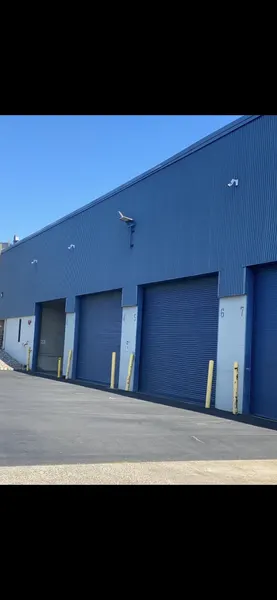
- Certified Protection installed 12 outdoor cameras with color at night technology at an Edison, NJ warehouse.
- Full project walkthrough | why color night vision matters for commercial facilities.
- Questions about your property? Certified Protection answers them free: 732-346-5333.
The Problem: Gray Footage After 6 PM
This Edison warehouse runs receiving operations from 5 AM through late evening. Trucks cycle through seven dock bays. Employees, temps, and delivery drivers come and go across a parking lot that stretches behind the building. The existing camera system, four analog cameras installed sometime around 2014, produced footage that was acceptable during the day and essentially useless at night.
That's the problem with traditional infrared security cameras. When the sun goes down, they switch to black and white mode. A red truck and a blue truck look identical. A person in a navy jacket and a person in a black hoodie are the same shade of gray. License plates wash out under headlights. If something happens after dark, the footage exists but rarely helps identify anyone.
The facility manager told us they'd had two incidents in the past year, both after dark, both involving people who shouldn't have been on site, and the footage from the old system gave them nothing actionable to hand to Edison police.
What color at night Actually Means
Color night vision cameras use a combination of larger image sensors, wider apertures, and supplemental warm spectrum LED illumination to produce full color footage in near total darkness. The difference isn't subtle. Side by side, a traditional IR camera shows a grayscale scene with blown out highlights. A color night camera shows the actual color of vehicles, clothing, signage, and packages, the things that matter when you're trying to figure out what happened.
For warehouse environments specifically, color night vision solves three recurring problems that IR cameras can't touch:
- Vehicle identification. Trucking companies track loads by trailer color and markings. When a color camera captures a truck backing into Bay 4 at 9:47 PM, you can tell it's a red FedEx trailer, not just "a truck." That matters for cargo verification and liability disputes.
- Person identification. Employee and visitor clothing details, jacket color, hat, high vis vest, company logo, are all visible. In a disciplinary or theft investigation, "the person in the orange vest" narrows the field immediately.
- License plate legibility. Color cameras handle mixed lighting conditions, headlights, overhead LEDs, ambient streetlight, without the washout that kills plate readability on IR systems.
The Installation: 12 Cameras, Full Perimeter
We mapped the property and identified every blind spot in the old four camera layout. The new design placed cameras at:
- Every dock bay entrance (7 cameras), angled to capture both the truck and the bay interior as the door opens. This gives the facility a visual log of every inbound and outbound load.
- Parking lot coverage (3 cameras), two wide angle units on the building corners and one on a pole mount covering the employee entrance. Full overlap so there are no dead zones in the lot.
- Perimeter approach (2 cameras), one covering the main driveway entrance from the road, one on the back service access. These are the first cameras that pick up anyone approaching the property.
All 12 cameras record at 4MP resolution with color at night active around the clock. Footage streams to an on site NVR (network video recorder) with 30 days of continuous retention, and the facility manager has remote mobile access to live and recorded video from anywhere.
The cable runs were clean, we used the existing conduit paths where we could and ran new outdoor rated conduit along the roofline for the perimeter cameras. Total installation took two days. The warehouse stayed operational the entire time.
Why This Matters for Edison Area Warehouses
Edison sits right on the Route 1 and Turnpike corridor, one of the densest warehouse clusters in the Northeast. The volume of goods moving through this area makes it a target, and the volume of people (employees, drivers, vendors, visitors) makes accountability essential.
Insurance carriers that cover warehouse operations are increasingly specific about what they expect from surveillance. "Cameras" isn't enough anymore. They want documented retention periods (minimum 14-30 days depending on the policy), resolution minimums (generally 2MP or higher), and coverage at access points, meaning if a truck backs into a dock, there's footage of it. Color night vision isn't universally required yet, but the carriers that handle high value goods are starting to ask for it explicitly.
The investment in a proper commercial camera system typically pays for itself within 18-24 months through reduced shrinkage, faster incident resolution, and lower insurance premiums. For this Edison facility, the facility manager estimated the old system's blind spots had cost them north of $30,000 in unresolvable claims over three years.
The difference between the old footage and what we have now is night and day, literally. First week after the install, we caught a driver backing into a bollard and trying to leave without reporting it. The color footage made it undeniable.
What We'd Recommend If You're in a Similar Spot
If your warehouse or distribution center is still running on cameras from 2018 or earlier, the technology gap is significant. A few things we tell every commercial client:
Don't patch, replace. Adding two new cameras to an aging system creates a Frankenstein setup with mismatched resolution, different recording formats, and multiple points of failure. If the core system is outdated, start fresh.
Color night vision is the new baseline. For any facility that operates beyond daylight hours, which is most warehouses, color night cameras eliminate the single biggest weakness of traditional surveillance: useless nighttime footage.
Integration with access control matters. At this Edison facility, the cameras operate standalone. The next step we discussed is tying camera triggers to their door access system so that a badge swipe at a dock door automatically pulls up the corresponding camera on the monitoring screen. That's where a camera system becomes a security platform rather than just a recording device. We cover that integration approach in our access control guide and our warehouse security overview.
If you're managing a warehouse in Edison, Piscataway, South Brunswick, or anywhere along the Route 1 corridor and your current cameras aren't giving you useful footage after dark, give us a call at 732-346-5333. We'll do a free walkthrough and show you exactly where your blind spots are.